
When Is Laminated Glass Required in the UK? Fall Protection & Building Regulations Explained
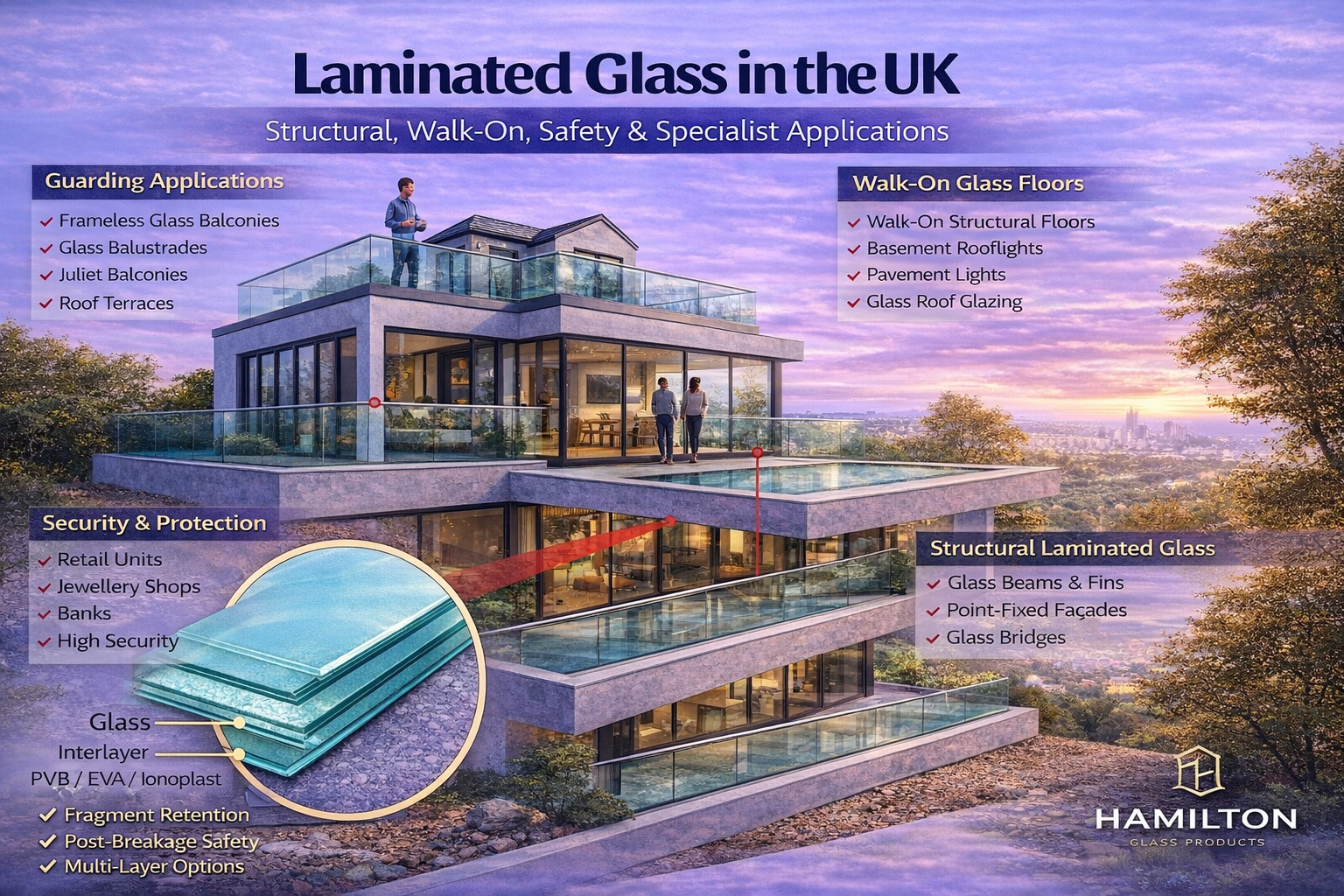
Laminated Glass in the UK
The Complete Technical Guide – Structural, Walk-On, Guarding & Specialist Applications
Introduction – What Laminated Glass Actually Is
Laminated glass is:
Two or more panes of glass
Bonded with one or more interlayers
Heat and pressure laminated in an autoclave
Designed to retain fragments after breakage
Its purpose is not just strength.
Its purpose is containment after fracture.
Used in:
Balustrades
Juliet balconies
Roof terraces
Walk-on glass floors
Basement rooflights
Structural glazing
Security glazing
Acoustic glazing
Transport glazing
Furniture and desk boards
Governing Standards (UK)
Laminated glass applications typically involve:
Approved Document K – Protection from falling, collision and impact
BS EN 14449 – Laminated glass product standard
BS EN 12600 – Pendulum impact classification
BS EN 12150 – If panes are toughened
BS 6180 – Barrier load design
UKCA / CE marking
Key distinction:
EN 14449 = product conformity
EN 12600 = impact behaviour
BS 6180 = barrier load performance
Approved Document K = regulatory trigger
They are not interchangeable.
Laminated vs Toughened – Core Technical Difference
Toughened Glass
4–5× stronger than annealed
Fragments into small granular pieces
Loses structural integrity immediately
Provides no post-fracture containment
Laminated Glass
May use annealed, heat-strengthened or toughened plies
Interlayer bonds fragments
Maintains containment
Can redistribute load after fracture (depending on design)
Impact safety ≠ fall protection.
Laminated glass addresses fall protection risk.
When Laminated Glass Is Required (Practical Reality)
Guarding Where Drop Exceeds 600mm
Under Approved Document K:
Guarding required where drop >600mm
900mm minimum internally
1100mm minimum externally
Where glazing forms the barrier:
Frameless balustrades
Juliet balconies
Roof terraces
Lightwells
Stair voids
Laminated toughened glass is typically the safer specification.
If monolithic toughened shatters:
Barrier disappears.
If laminated shatters:
Fragments adhere.
Containment maintained.
Laminated Toughened Glass
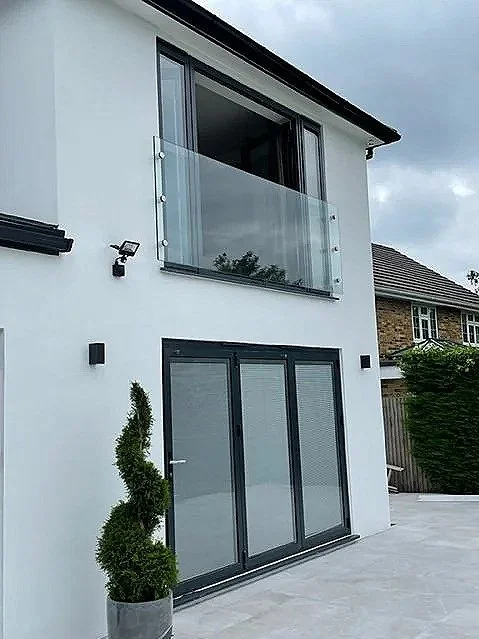
Frameless laminated glass Juliet balcony installed on modern white property in Surrey, fixed with stainless steel stand-off bolts providing compliant external guarding under UK Building Regulations.
Common high-performance configuration:
Two toughened panes
Bonded under EN 14449
Impact classified under EN 12600
Benefits:
High strength
Fragment retention
Residual barrier performance
Used in:
Frameless balustrades
Structural partitions
Commercial guarding
Public buildings
Walk-On Laminated Glass (Glass Floors)
Used in:
Glass floors
Basement rooflights
Pavement lights
Terrace roof glazing
Construction typically:
Multi-layer laminated
Toughened plies
Often triple laminated
Anti-slip surface
Design considerations:
Imposed load
Point load
Deflection limits
Post-fracture containment
Structural calculation required
Walk-on glass is an engineered laminated structural assembly.
It is not “extra thick toughened”.
Structural Laminated Glass
Used in:
Glass fins
Structural beams
Glass bridges
Point-fixed systems
Facades
Performance depends on:
Interlayer stiffness
Support detail
Span
Edge condition
Ionoplast (SGP-type) interlayers provide:
Increased stiffness
Reduced creep
Improved post-breakage load transfer
Structural laminated glass is engineered, not decorative.
Interlayer Types
PVB
Standard domestic
Flexible
Good fragment retention
EVA
Improved moisture resistance
Better for external conditions
Ionoplast (SGP type)
Stiffer
Higher residual load capacity
Used in structural systems
Interlayer choice affects:
Deflection
Creep
Post-fracture strength
Long-term performance
Laminated Glass in Security
Improves resistance to:
Forced entry
Smash-and-grab
Impact penetration
Higher-spec laminates can meet:
EN 356 classifications
Common in:
Retail
Jewellery shops
Banks
Public buildings
Security glazing is layered engineering, not standard laminate.
Acoustic Laminated Glass
Uses specialist acoustic interlayers.
Benefits:
Improved sound insulation
Vibration damping
Reduced impact noise
Used in:
Urban residential
Transport-adjacent sites
Offices
Acoustic laminated glass outperforms monolithic toughened acoustically.
Common Specification Failures
Monolithic toughened used for frameless balcony
No structural calculation
No residual containment consideration
Incorrect interlayer selection
No EN 12600 classification evidence
Guarding height measured from slab not finished floor
Most failures are design failures.
Documentation & Compliance
Professional supply should include:
Declaration of Performance
EN 14449 conformity
EN 12600 impact classification
Structural calculations (if required)
Installation method
Corner stamp ≠ full compliance.
Documentation matters.
Professional Specification Flow
Identify risk (impact vs fall)
Confirm drop height
Confirm guarding height
Determine structural load
Select glass type
Select interlayer
Confirm impact class
Verify documentation
Record compliance
This is defensible glazing practice.
Final Conclusion
Laminated glass is:
A containment system
A structural redundancy system
A fall-protection system
A security enhancement system
An acoustic performance system
Its performance depends on:
Glass type
Interlayer type
Thickness
Support condition
Load design
Installation quality
When specified correctly, laminated glass provides:
Containment.
Compliance.
Structural resilience.
Long-term safety.
When specified incorrectly, it may appear compliant but fail when needed most.
That is where professional knowledge matters.